
 Hop Studios | author photo by Eric B. Dynowski
THE NEW NATURE MOVEMENT: On People and the Natural World
Rich is currently writing his next book, so blog posts will be less frequent.
Page 7 of 9: ‹ First < 5 6 7 8 9 >
The Little Things

On Thanksgiving
The little things. The click of your wife's makeup bottles and brushes in the bathroom in the morning, the subsurface sound of them, a kind of music. The accompaniments: the older boy's bedroom door opening and shutting in haste, a faucet running, a gust of wind in the eucalyptus, the last rain on the window. The little things are what we remember, what we know, of family life. Of life.
The large events have their place, but even the large events of a family's passage are assembled from little things. The rush to the emergency room and the way the air feels there and the brave little chin thrust up beneath the mask, the small choked cry and the sound—especially this sound—of the thread being pulled through the wound, and the way the little hand holds tight to your finger. The little things.
Read Full PostThe Cure
Took medicine for nature-deficit disorder with buddy John Johns on Wednesday.
Feeling better, thanks.
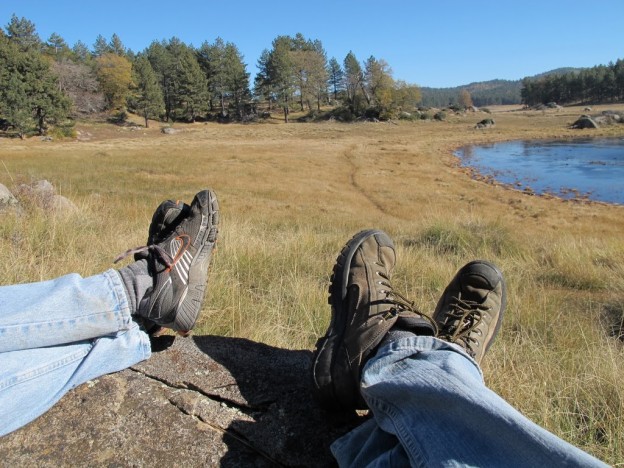
Photo by John Johns
Read Full PostA New Way to Shape Your Community's Future
”Nature is not a place to visit, it is home.” —Gary Snyder.Â
A few months ago, at the Minnesota Arboretum, several hundred people from a variety of sectors – tourism, housing development, health care, education, and others – came together for a conference focused in part on the Nature Principle.
I was especially intrigued by the remarks of Mary Jo Kreitzer, a nursing professor at the University of Minnesota and director of the university’s Center for Spirituality and Healing. She said the state should make it a goal to become the healthiest state in the country, and that viewing the future through the prism of the Nature Principle could help Minnesota reach that goal.
She and others asked: If nature were the prism through which the future was imagined, what would it be like to live in that future?
Read Full Post21 Ways to Plant a Restorative City
During the first week of November, members of the American Society of Landscape Architects and their colleagues from around the country – over 5,000 strong – met at the San Diego Convention Center. Saving the world was somewhere on the agenda.
Could they be the group with the most influence on human habitat in the future, particularly when it comes to the connection between children and adults to the rest of nature? “Because of their training, landscape architects are big thinkers, or tend to be,” says my friend, Vicki Estrada, a landscape architect, urban designer, and president of Estrada Land Planning in San Diego.
Asked to speak at the conference, I offered a starter list of suggestions for how landscape architects, and the rest of us, could truly green our cities:
Do You Live in a "Restorative City?"
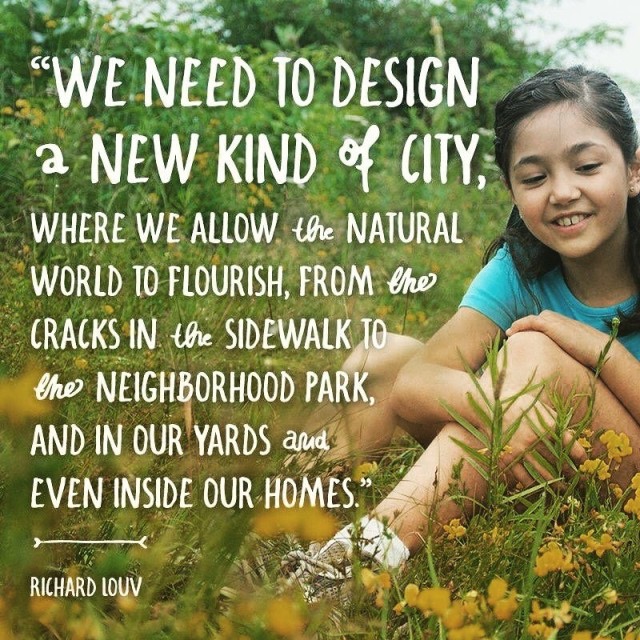
“Nature is not a place to visit, it is home.” -— Gary Snyder
Afew months ago, at the Minnesota Arboretum, several hundred people from a variety of sectors – tourism, housing development, health care, education, and others – came together for a conference focused in part on the Nature Principle.
I was especially intrigued by the remarks of Mary Jo Kreitzer, a nursing professor at the University of Minnesota and director of the university’s Center for Spirituality and Healing. She said the state should make it a goal to become the healthiest state in the country, and that viewing the future through the prism of the Nature Principle could help Minnesota reach that goal.
Read Full PostSaving the Field of Dreams: Building 'Natural Cultural Capacity' to Enrich Our Parks and Cities
Despite some signs of progress, the impact of recession on public access to the natural world is a reality, and it could get worse.
Take California, for instance. In coming months, as many as 70 parks, many of them in or near urban areas will close, according to California State Parks Director Ruth Coleman. This, she says, is the only way to absorb a $33 million parks budget cut over the next two years. “California has never closed its parks in its history, through two world wars and the Great Depression,” Coleman said two weeks ago, in her keynote speech at the annual C&NN Grassroots Gathering.
Never, until now. During the Great Depression state and national parks were valued not only for the nature they preserved but for the jobs they provided and their positive economic impact on nearby private businesses. That was then, this is now. A different political climate, changing economic realities, and the widening gap between rich and poor could, literally, change the landscape.
Read Full PostApocalypse No: Something large and hopeful is forming out there. You're already creating it.
The long day wanes: the slow moon climbs: the deep

Moans round with many voices. Come, my friends,

‘Tis not too late to seek a newer world.

- Alfred, Lord Tennyson
Why is the future so often portrayed as a post-apocalyptic dystopia, filled with human brutality and stripped of nature?
For decades, our culture has struggled with two addictions: to oil and to despair. But what if our lives were as immersed in nature as they are in technology every day? What if we not only conserved nature, but created it where we live, work, learn and play? What if something large and hopeful is already forming out there; what if we’re part of it?
Read Full PostMidnight at Ground Zero
November 4, 2001
NEW YORK—It’s midnight at ground zero. During the day, the endless funeral procession crosses the Williamsburg Bridge or comes up out of the subways or arrives on streams of yellow taxis. People cry on the way to the towers, a Haitian cab driver will tell you. Or they’re quiet, as if holding their breath.
The smell is famous by now, a new kind of celebrity. But it only comes now and then, when the wind shifts. During the day, ground zero is dominated by the familiar spine and its attachments; the teeth and skeletal fingers reaching up toward the lost bowl of the sky. But at midnight, the fingers and the teeth disappear, and you see something else.
Read Full PostNature's Own Stimulus Package: 7 Ways to Improve Our Lives in Tough Economic Times
For stressed-out families, spending more time in the natural world — a nature stimulus package — may be just what the doctor and the economist ordered. Here are a few of the benefits:
 1. With gas prices on the rise, families are rediscovering both the joy and the cost-effectiveness of getaways in nearby nature, including regional, state or national parks. As Outside magazine puts it, “near is the new far.”
2. Unless we’re talking about a new bass boat or a high-tech tent, nature toys are free or cheap, and they encourage self-directed creativity. In 2008, the National Toy Hall of Fame in Rochester, N.Y., inducted the stick, which it called not only possibly the oldest toy, but “possibly the best.”
3. Green exercise is free. In the United Kingdom, and now in the United States, families are eschewing commercial indoor gyms. Groups of families form ” green gyms” and meet once or twice a week to hike, garden or take some other type of exercise in the natural world.
Read Full PostThe More High-Tech Schools Become, the More They Need Nature
I
He wasn’t being cute. Recent studies of the human senses back that statement up. “We need people who have both ways of knowing the world,” he added. In “The Nature Principle,” I tell that story to describe what I call the “hybrid mind." I make the case that one goal of modern education should be to encourage such flexible thinking. Is education moving in that direction? Some schools are, but too many are putting all their eggs on one computer chip.
Read Full PostAlmost as an article of religious faith, school districts are flooding students with computers and other Internet-connected gadgets. Yet, as The New York Times reported on Sept. 3, 2011, "to many education experts, something is not adding up." Schools are spending billions on technology "even as they cut budgets and lay off teachers, with little proof that this approach is improving basic learning."


 Hop Studios